
How to Help · Baby-Care Refresher
What's Changed Since You Had Your Babies: A Grandparent's Refresher
The handful of baby-care updates since you raised yours, from safe sleep to car seats to feeding, so you can show up confident and genuinely helpful.
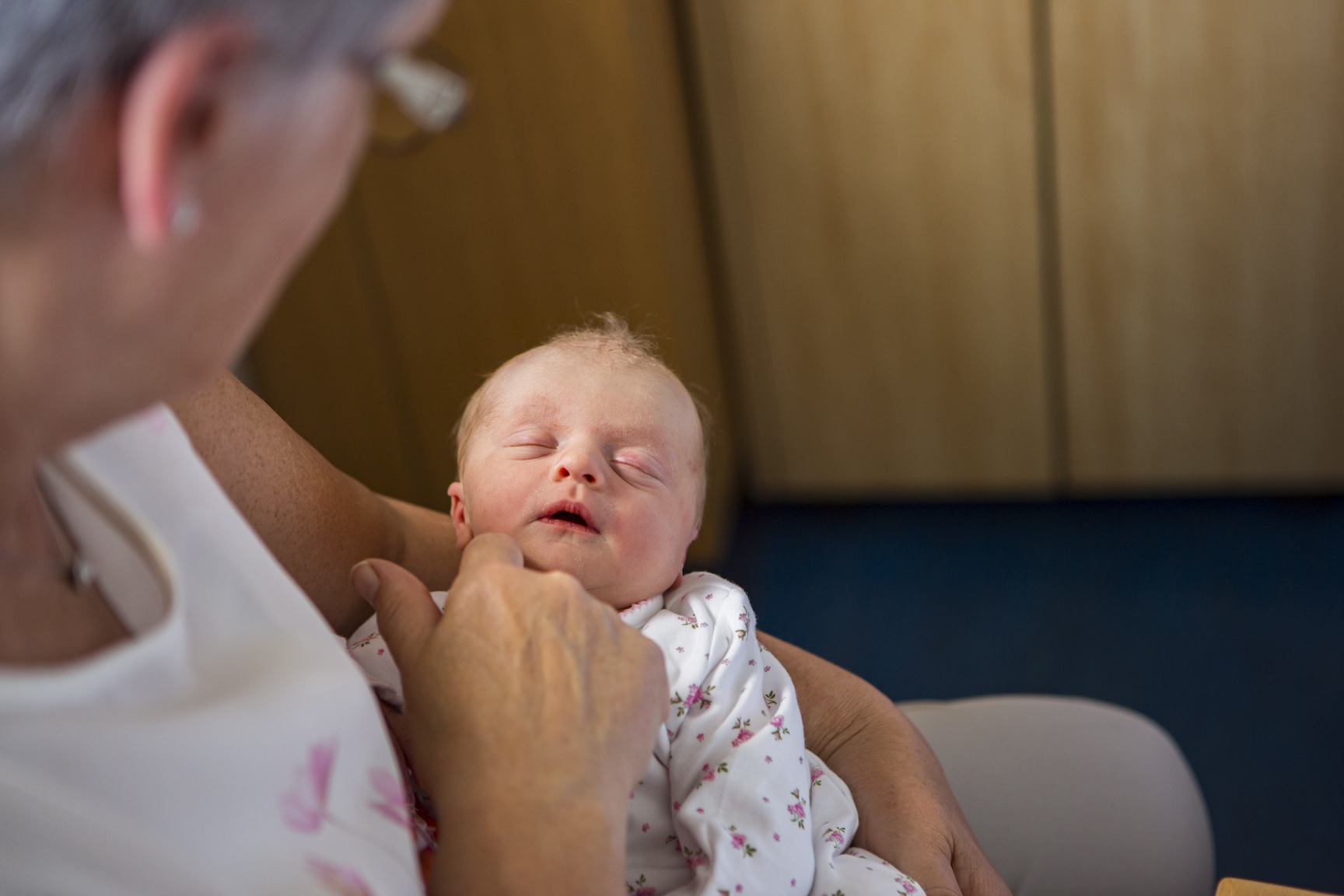
You already did the hardest job there is. You raised the very person who is about to become a parent, and you did it with love, instinct, and a lot of sleepless nights. So let us be clear from the start: this guide is not here to tell you that you did anything wrong. You did not. The science of caring for babies has simply kept moving, the way it always does, and a few of the things that were standard advice when you were up at 2 a.m. have changed.
The good news is that most of what changed comes down to a handful of clear, easy-to-remember updates. Learn these, and you get to be the grandparent who shows up confident and genuinely helpful, the one the new parents trust with the baby, instead of the one they quietly worry about. That is a lovely thing to be.
Here is the refresher, one topic at a time.
01Safe sleep: back is best, and the crib stays bare
This is the biggest change, and the most important one. When you were raising babies, you may have been told to put them to sleep on their tummies or sides. Today the guidance from the American Academy of Pediatrics is clear: healthy babies are placed on their backs for every sleep, naps included, until they can roll over on their own in both directions. Back sleeping is the single biggest reason sleep-related infant deaths have dropped so dramatically since the 1990s.
The other half of the rule is the bare crib. The nursery pictures we all grew up with, the ones with the padded bumpers, the quilt, the pillow, and a pile of stuffed animals, are exactly what is no longer recommended. A safe sleep space today is a firm, flat mattress made for infants, with a fitted sheet, and nothing else in it. No bumpers, no blankets, no pillows, no positioners, no toys. It looks bare, and that bareness is the point.
- The baby sleeps on a flat surface, not an inclined one. Inclined sleepers were actually pulled from the market for safety reasons.
- Room-share, do not bed-share. The baby sleeps in their own crib or bassinet, ideally in the parents room for the first six months, but not in the adult bed. This one is often hard for grandparents, because bed-sharing may be exactly how you did it, but the guidance now is firm that the baby has their own safe surface.
- Babies should not routinely sleep in car seats, swings, or bouncers. If a baby falls asleep in one, the safe move is to move them to a flat sleep surface.
- If a baby falls asleep in your arms, that is still one of the great joys of the world and completely safe while you are awake and holding them, so do it as much as your heart wants. The one thing to truly avoid is dozing off together, especially on a couch or an armchair, which is where sleepy cuddles can turn risky.
02The car seat rules changed too
Rear-facing is the rule, and for longer than you would expect. The current guidance is to keep a child in a rear-facing car seat as long as possible, until they reach the height or weight limit of the seat. The old milestone of turning the seat around at age one or age two has been dropped. Rear-facing is dramatically safer for a small body in a crash, so the longer, the better.
- No bulky winter coats in the car seat. A puffy coat compresses in a crash and leaves the harness too loose to hold the child. Buckle the child in first, then lay the coat or a blanket over the top of the straps.
- Take the baby out of the car seat once you arrive. A car seat is for the car. Letting a baby sleep for long stretches in a seat outside the car is not recommended. Car seats semi-recline, which can cause a baby's head to slump forward and block their airway, and the American Academy of Pediatrics advises that infants should spend no longer than 90 minutes at a time in a car seat.
03Before you hold the baby: a couple of shots, and the hard one about kissing
This is one of the newer things, and it is worth doing well, because a newborn immune system is wide open in the first weeks. A common bug that would give you a sniffle can land a baby in the hospital.
First, the shots. Doctors now recommend that the people who will be around a new baby, grandparents very much included, be up to date on a few vaccines before meeting them. The big one is the Tdap booster, which protects against whooping cough. Whooping cough is genuinely dangerous, even deadly, for a newborn, and adults often spread it without ever knowing they have it. The guidance is to have had a Tdap booster within the last ten years, and ideally to get one at least two weeks before you meet the baby. Alongside that, a current flu shot, a COVID vaccine, and, depending on the season, the RSV vaccine are recommended for close family, because flu and RSV are especially hard on tiny lungs. The baby parents and their doctor can tell you exactly what is advised, but the short version is simple: get your Tdap and your flu shot before you are holding that baby.
Second, clean hands, every single time. Wash up before you pick the baby up, ask everyone else to do the same, and please stay away altogether if you are feeling even a little under the weather. It is not personal. It is just those brand-new lungs.
And now the hard one. Try not to kiss the baby, at least in the early weeks, and especially not on the face or hands. This is the one that breaks a grandparent heart, because kissing that little face is the thing you most want to do. But newborns are extremely vulnerable to a few things that pass through a kiss, most seriously the cold sore virus (HSV). In a grown-up a cold sore is just a nuisance, but in a newborn that same virus can be life-threatening, and a person can carry and spread it without any visible sore at all. Kisses can also pass along RSV and whooping cough. So in those first weeks, snuggle all you want, hold the baby, breathe them in, kiss the top of their head or their tiny feet, but skip the face and lips, and never kiss a baby if you feel a cold sore coming on. It is a short season, and holding back is one of the most loving things you can do.
04Feeding: solids come later, and skip the cereal in the bottle
Timing moved. It used to be common to start cereal and solids within the first weeks or couple of months. The current guidance is to wait until around six months, and to look for signs the baby is ready, like sitting up well and showing interest in food, rather than going by the calendar alone.
Please skip the rice cereal in the bottle. This was well-meant advice for decades, usually offered as a way to help a baby sleep through the night. We now know it does not actually help sleep, and it adds a real choking risk. Bottles are for breast milk or formula.
- No honey until after the first birthday. Honey can carry spores that cause infant botulism, which is serious in a baby whose system is still developing. This includes honey baked into foods and honey on a pacifier.
- No cow milk as a drink before twelve months. Small amounts in cooking are fine after solids begin, but it is not a drink for the first year.
- Hold off on water until around six months. Before then, breast milk or formula gives babies all the hydration they need.
- Breastfed babies usually need a vitamin D supplement, typically 400 IU a day in drops. This is newer guidance, so do not be surprised if you see the parents giving a tiny daily drop.
05The big reversal: allergens come early now, not late
If there is one change that will genuinely surprise you, it is this one, because it is the exact opposite of what parents were told for years. You were likely advised to keep peanuts, eggs, and other common allergens away from babies for as long as possible. The advice has completely reversed.
The current guidance, based on strong research, is to introduce common allergenic foods early, in age-appropriate forms, rather than delaying them. For most babies, that means offering foods like peanut (as a thin smooth peanut butter or a peanut puff that dissolves, never whole peanuts, which are a choking hazard) around the time other solids begin, at about six months. Introducing these foods early actually helps the body build tolerance and lowers the chance of developing a food allergy.
A nuance worth respecting
Babies at higher risk, meaning those with severe eczema or a known egg allergy, should have this conversation with their pediatrician first, because they may need to introduce peanut a little earlier and sometimes after allergy testing. So if you hear the parents say the doctor wants to guide the timing, that is exactly right.
If the parents are offering peanut butter to a six-month-old on purpose, they are not being reckless. They are following the newest and best advice.
06Teething: skip the necklace and the numbing gel
The amber teething necklace, and any teething jewelry, is not recommended. The FDA has warned that these pose real choking and strangulation risks, and there is no good evidence they help. A necklace on a baby is simply not safe.
Skip the numbing gels too. Over-the-counter teething gels that contain benzocaine (the ingredient in products like Orajel) carry an FDA warning against use in children under two, because they can cause a rare but serious blood condition. Old-fashioned remedies like rubbing whiskey or brandy on the gums are never safe either.
What does help is refreshingly simple: a clean, chilled (not frozen) teether, a cold washcloth to gnaw on, and gentle pressure from a clean finger. Boring, and completely safe.
07Walkers, and a word about spoiling
Baby walkers, the kind with wheels that let a baby scoot around, are no longer recommended. They send thousands of babies to the emergency room, usually from falls down stairs, and they do not actually help a baby learn to walk any sooner. A stationary activity center that does not roll is the safer choice.
And here is one that may bring you relief rather than change your habits: you cannot spoil a newborn. For a long time the worry was that holding a baby too much would spoil them. We now understand the opposite. Responding to a baby, holding them, comforting them, rocking them, builds their sense of security. So hold that grandbaby as much as your heart wants. That instinct of yours was right all along.
What has not changed at all
With all these updates, it is easy to feel like everything is different. It is not. The things that matter most are exactly what they have always been, and they are the things you are already wonderful at.
Your love has not changed. Rocking a baby, singing to them, reading to them, talking to them, and simply holding them close are as good for a baby today as they have ever been. Skin-to-skin cuddles, narrating your day out loud, the same lullabies you once sang, all still perfect. Tummy time while the baby is awake and watched is encouraged now (it helps them build strength), but the warm, patient, present grandparent in the room is the part that was never going to change.
A gentle note on following their lead
One last thing, and it is the most important of all. Every baby is different, and every family gets to make their own choices with their own pediatrician. The kindest, most helpful thing a grandparent can do is to follow the parents lead and support the way they have decided to do things, even when it is different from how you did it.
Try saying
Maybe skip
Try saying
How are you two handling this one?
Maybe skip
Well, we always did it this way.
You raised them well enough to become parents. Trusting them now is its own kind of gift.
You have got this. The love is the part that matters most, and you have that in spades. The rest is just a quick refresher.
Want to go a little deeper?
If you would like a fuller walk-through, the Mayo Clinic offers a lovely on-demand class made just for grandparents, called Understanding Grandparenting. It is self-paced (around two to three hours), and it covers today baby care, safety essentials, and how to be the kind of help new parents are truly grateful for. A thoughtful way to show up prepared and confident.
Be part of the journey, not just ready for it
At Charmed Beginnings, we made a free space just for the grandparents, partners, and friends cheering on a new mama. You can follow her pregnancy week by week, see how the baby is growing and how she is feeling, and get gentle, up-to-date guides like this one, so you always know how to show up. It is a lovely way to feel close to it all, especially if you live far away.
And when you are ready to spoil her, our keepsake charm bracelet and a box of comforts chosen for exactly where she is in her pregnancy make a gift she will actually treasure, one milestone charm at a time.
Show up beautifully
Create your free supporter accountFollow her pregnancy week by weekSend her a gift she will treasureThe keepsake charm bracelet and a box of comfortsSources
- American Academy of Pediatrics, A Parents Guide to Safe Sleep (HealthyChildren.org)
- American Academy of Pediatrics, Car Seats: Information for Families (HealthyChildren.org)
- FoodAllergy.org, Peanut Early Introduction Guidelines
- National Institute of Allergy and Infectious Diseases, Addendum Guidelines for the Prevention of Peanut Allergy in the United States
- American Academy of Pediatrics, Teething Necklaces and Beads: A Caution for Parents (HealthyChildren.org)
- AAP News, FDA warns teething products with benzocaine may pose safety risk
This guide is for general educational information only and is not medical advice, nor a substitute for care from a qualified professional. Recommendations can change over time, and every baby is different. Always follow the guidance of the baby parents and pediatrician, who know the individual child best. If you have a medical concern about a baby, contact a healthcare provider. Last reviewed September 2026.
Charmed Beginnings
Looking for the perfect gift for her?
A keepsake charm bracelet and a curated box of comforts, matched to exactly where she is.
See the giftKeep reading
The Supporter's Starter Guide
How to be the person she needs
How to Support Your Pregnant Partner: A Dad-to-Be’s Guide
Here is the honest truth most guides skip: your partner is doing the physical work of building a human, and you are standing next to her wanting to help but not always sure how. That does not make you clueless. It makes you a decent partner who cares.
What to Say (and What to Skip)
The words that help, and the ones that might just sting